

Do you need IP protection levels for your Outdoor Cabinets?

Key Takeaways
- IP ratings indicate how effectively an outdoor cabinet protects internal equipment from dust and water.
- IP44 may suit sheltered locations, while IP55 or IP65 is more appropriate for most exposed outdoor installations.
- IP66 and IP67 are designed for harsher conditions involving strong water jets, heavy rain, or temporary immersion.
- The correct rating should consider rainfall, dust, salt, temperature changes, ventilation, and maintenance frequency.
- Cable entries, vents, gaskets, and mounting holes must be properly sealed to maintain the cabinet’s rated protection.
- Higher protection is not always better, as tightly sealed cabinets may require additional thermal management.
Why Outdoor Cabinets Face Environmental Challenges?
Indoor electrical enclosures only need to contend with occasional spills and ambient dust. Outdoor cabinets operate in an unregulated environment with persistent threats that degrade seals, corrode metal, and damage electronics over time.
- Direct rainfall, wind-driven spray, and irrigation jets force water through gaps in doors, hinges, and cable glands.
- Windborne dust, sand, and pollen abrade gaskets and settle on circuit boards, causing overheating and short circuits.
- UV radiation from sunlight weakens plastic components and accelerates rubber seal aging.
- Coastal and industrial atmospheres carry salt spray and chemical pollutants that induce galvanic corrosion.
- Large temperature swings create condensation inside the sealed cabinet, dripping onto live components.
What Is an IP Rating?
IP stands for Ingress Protection, a standardized two-digit classification defined under IEC 60529 that quantifies a product’s resistance to solid foreign bodies (first digit) and liquid ingress (second digit).
First digit (0–6): Dust and solid particle protection level.
Second digit (0–8): Water resistance against dripping, splashing, spraying, jetting, and submersion.
For outdoor electrical cabinets, the practical range begins at IP44 and extends up to IP67; higher numbers correspond to superior sealing performance.
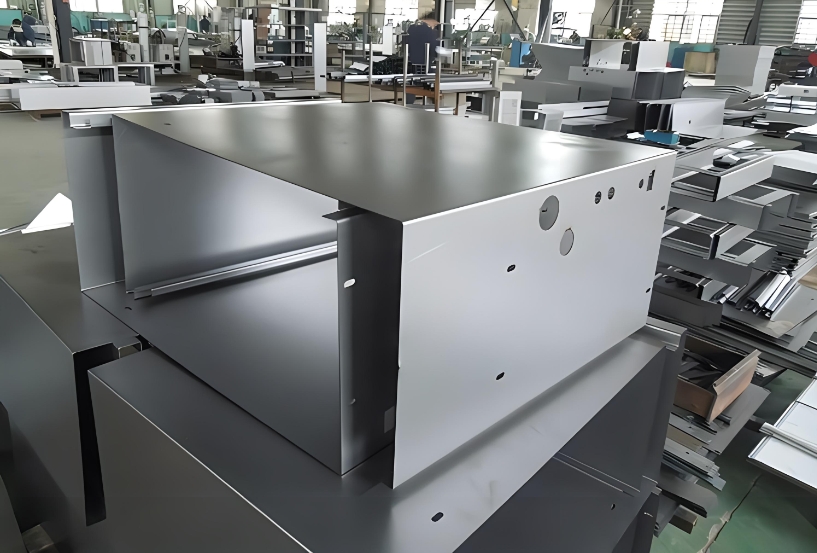
Typical Outdoor IP Ratings (IP44–IP67)
- IP44: Protects against solid objects larger than 1 mm and splashing water from any direction.
- IP55: Offers limited dust protection and resistance to low-pressure water jets.
- IP65: Fully dust-tight and protected against water jets.
- IP66–IP67: Designed for very harsh conditions, including strong water jets or temporary immersion.
As the numbers increase, so does the cabinet’s ability to handle dust and water exposure.
Choosing the Right IP Rating
IP44 – Covered, Sheltered Locations
Use for carports, under eaves, covered walkways, or mechanical rooms with open ventilation. Not suitable for direct rain or hose-down cleaning.
IP55 – General Exterior Mounting (Most Popular)
Works for pole-mounted telecom boxes, street lighting controls, garden equipment, and rooftop installations with moderate rainfall. Blocks most dust and direct low-pressure water spray.
IP65 – Fully Dustproof & Jetproof (Industry Standard)
The default specification for energy storage BESS cabinets, solar combiner boxes, and roadside infrastructure. Complete dust exclusion and safe against high-pressure washing.
IP66 / IP67 – Extreme Exposure
IP66 withstands powerful directed water jets; IP67 permits temporary submersion up to 1 meter for 30 minutes. Deploy in flood-prone zones, wash bays, coastal salt spray environments, or underground pits.
IP Ratings Breakdown & What They Protect Against
- First Digit (Solid Protection)
- 4: Objects ≥1mm (tools, thick wires, large debris)
- 5: Dust protected (limited dust ingress, no harmful deposits)
- 6: Dust tight (zero dust penetration)
- Second Digit (Water Protection)
- 4: Splash-proof from all angles
- 5: Protected against low-pressure water jets
- 6: Protected against powerful high-pressure jets
- 7: Protected against temporary immersion (1m depth, 30 min)
IP vs Other Standards (NEMA, UL, etc.)
IP only tests dust and water ingress. Regional standards add corrosion, UV resistance, impact, and flammability criteria:
- NEMA 4 / NEMA 4X (North America): Equivalent to IP65 plus corrosion resistance, ice resistance, and hose-down safety. NEMA 4X includes stainless steel anti-corrosion for coastal sites.
- UL Listed: Focuses on electrical safety, fire hazard, and shock protection rather than environmental sealing.
- IK Impact Rating: Separate rating for mechanical shock and vandal resistance, often specified alongside IP for public street cabinets.
Common Mistakes in Specifying IP Ratings
- Assuming the cabinet door rating guarantees full system IP — cable glands, ventilation filters, and mounting cutouts break the seal if poorly fitted.
- Over-specifying IP67 for standard outdoor use: fully hermetic enclosures trap heat and require costly heat exchangers or air conditioners.
- Ignoring condensation risk: high IP enclosures cannot breathe; install drainage holes or thermostatically controlled breathing valves.
- Forgetting gasket degradation: rubber EPDM seals degrade under UV and temperature cycling, reducing IP performance after several years outdoors.
- Mismatched accessories: low-grade plastic cable glands in an IP65 cabinet drop the effective rating to IP54 or lower.
Final Recommendation
For 90% of commercial outdoor power, solar, and energy storage applications, specify IP65 as the baseline. Upgrade to IP66/IP67 only for wash-down, flood risk, or severe coastal salt corrosion projects, and always budget for proper cable sealing and thermal management.